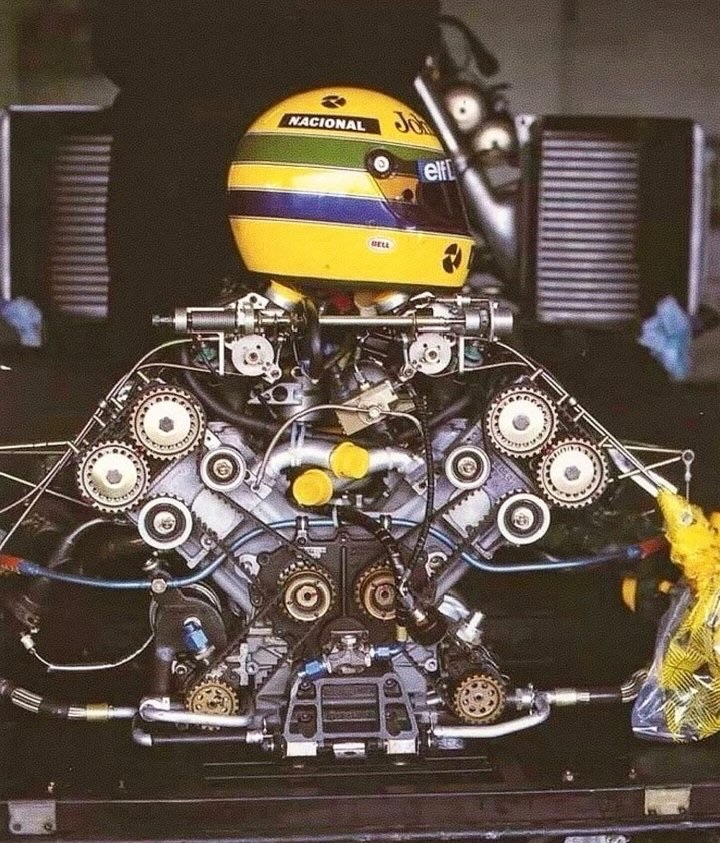
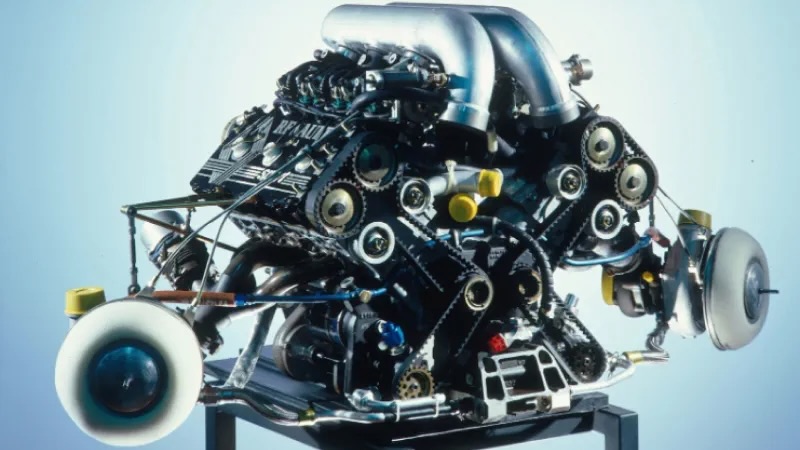
The Renault EF-type engine marked a turning point in F1 engine design. Introduced in 1977 and developed through to the EF15 of 1985, it helped establish turbocharging as the defining technology of the 1980s before such engines were eventually banned, only to return in hybrid form in 2014.
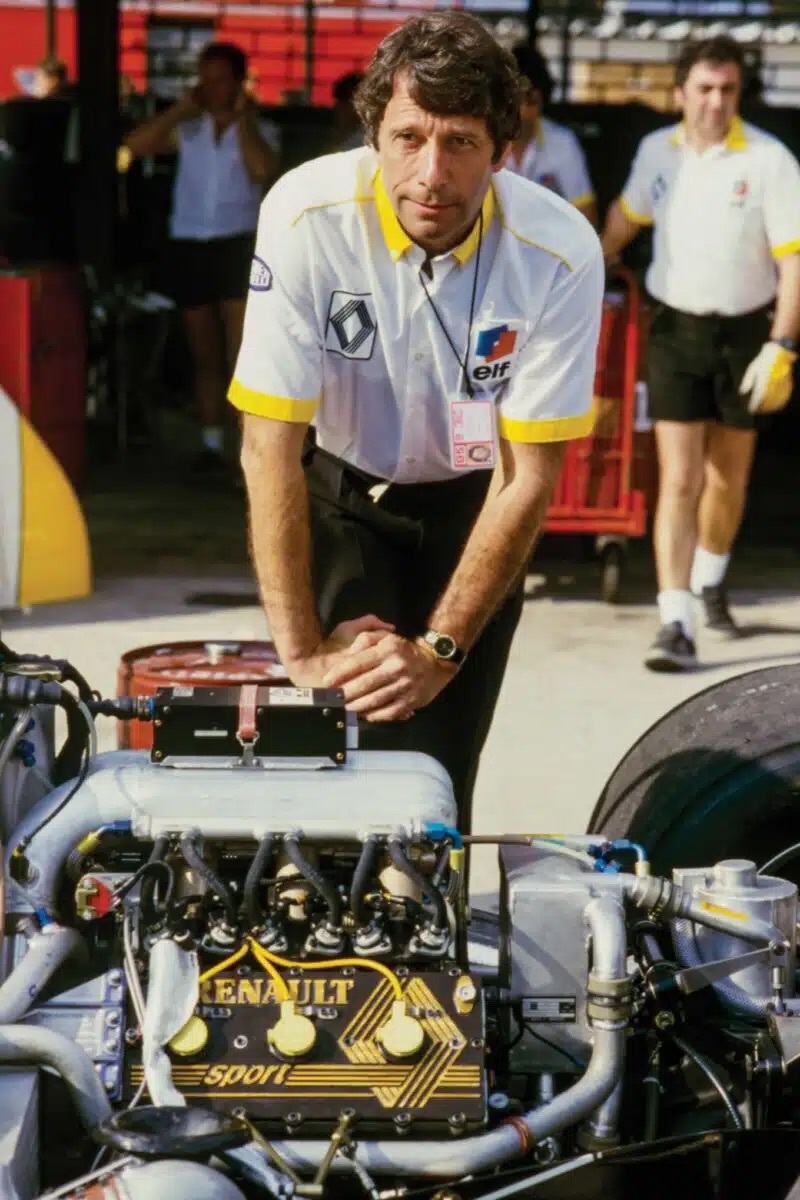
The program was led by Bernard Dudot and developed from the earlier CH-series 2.0L V6 originally designed by Francois Castaing.
Its origins lay in F1 regulations introduced in 1966, which permitted either a 3.0L naturally aspirated engine or a 1.5L forced-induction unit. Most teams chose the larger configuration, particularly the Ford Cosworth DFV V8 that powered much of the grid. Renault, however, recognized the potential of the rules' 2:1 equivalence ratio and concluded that a smaller turbocharged engine could eventually rival the larger normally aspirated units.
Turbocharging itself was well established in aviation and endurance racing but remained largely unexplored in F1. In 1975 Renault's Gordini division began developing a small turbocharged engine for Alpine sports-prototypes competing at Le Mans. The program provided valuable experience in cooling, boost control, and durability, culminating in victory at the 1978 24 Hours of Le Mans.
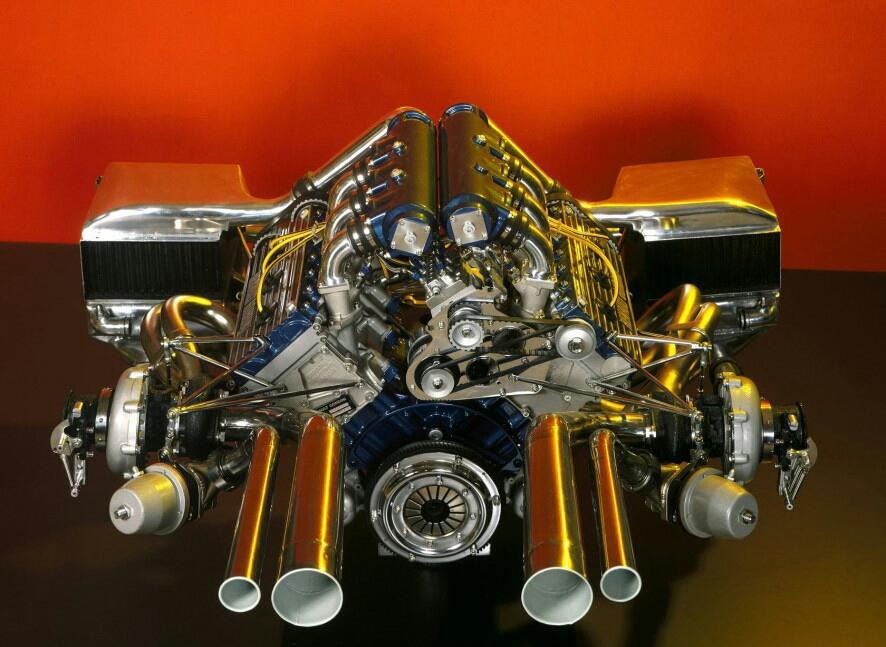
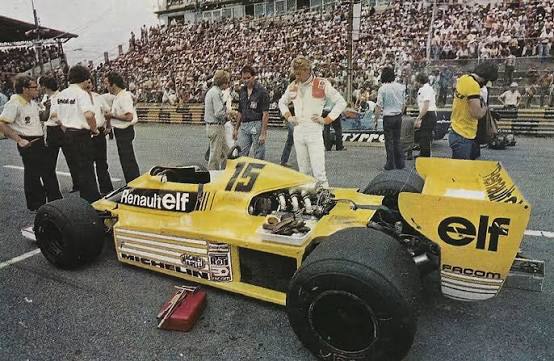
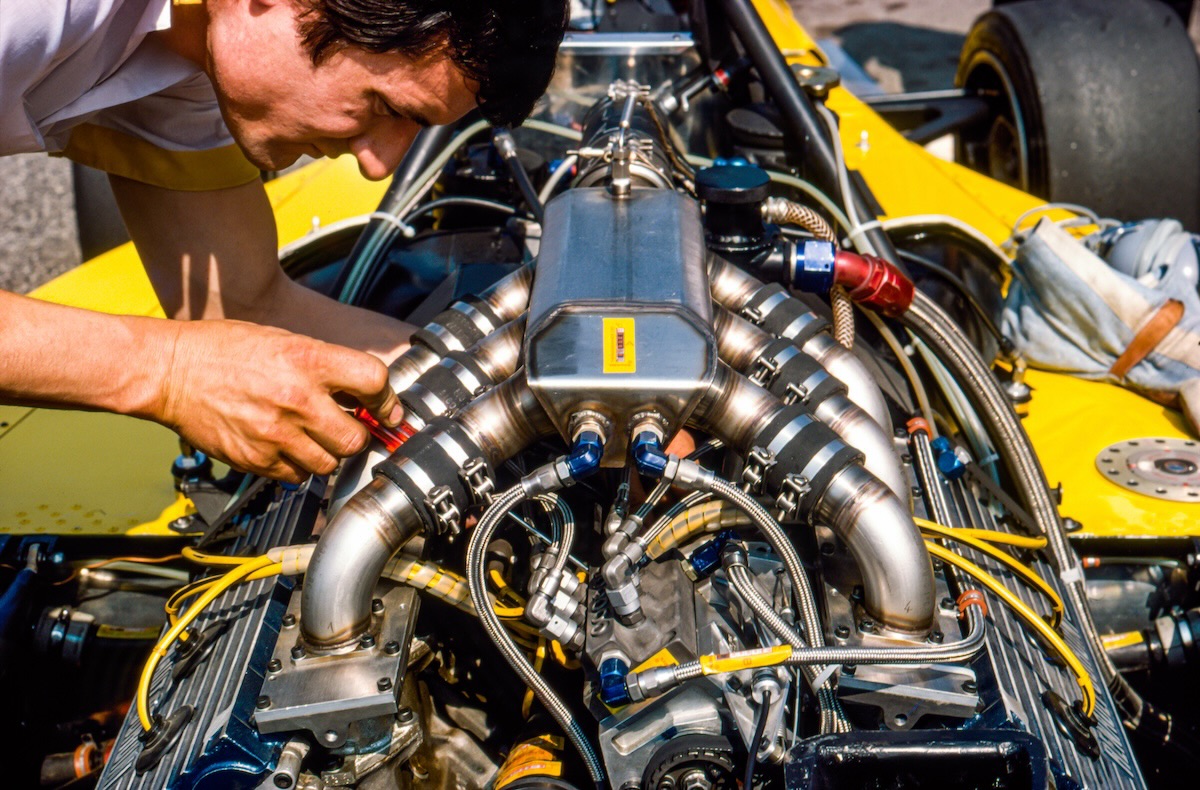
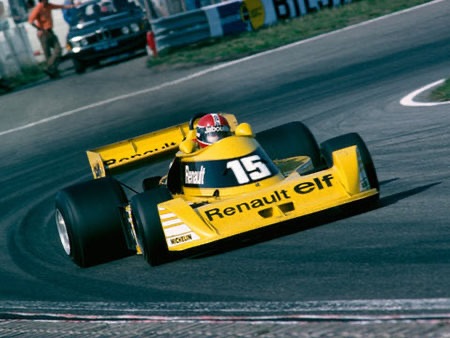
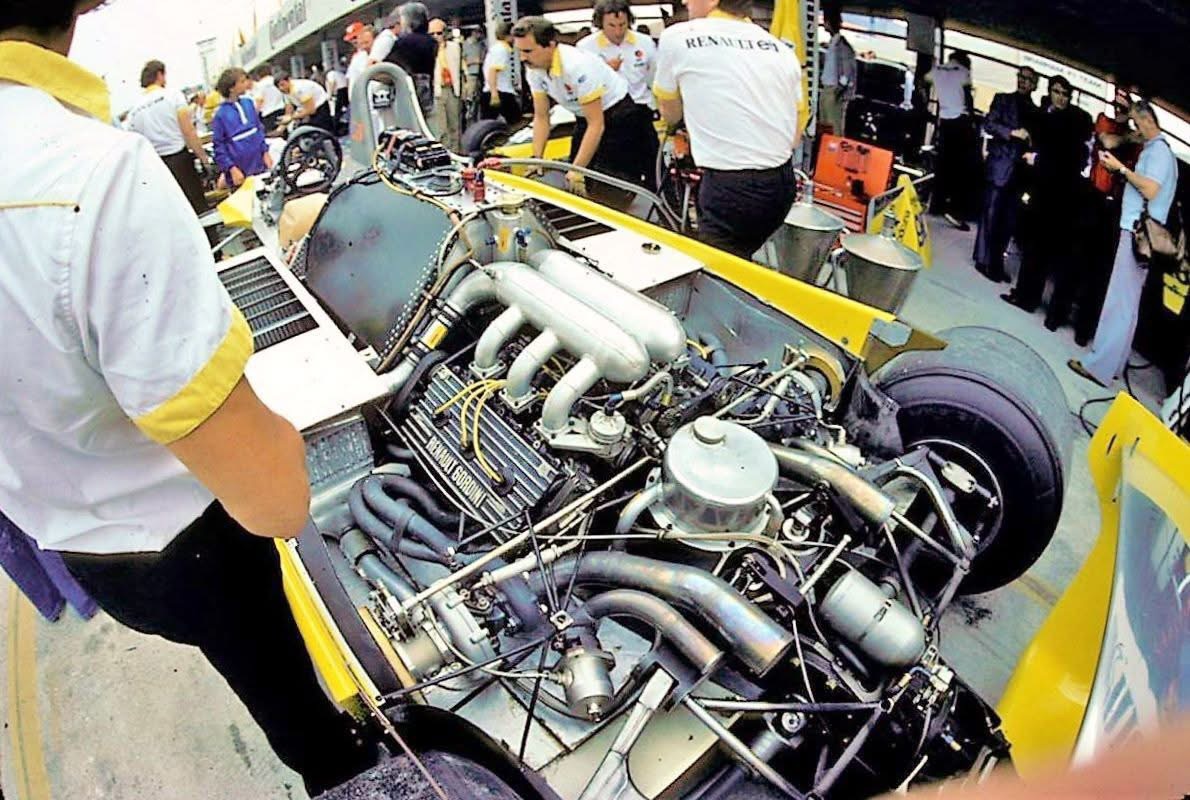
Renault entered F1 in July 1977 at Silverstone with the RS01 chassis and the EF1 engine. The unit was a 90-degree V6 of 1492 cc with an 86 mm bore and 42.8 mm stroke, four valves per cylinder, belt-driven camshafts, and a single turbocharger. Weighing about 179 kg dry, it produced roughly 500 hp when on boost but far less outside the narrow power band.
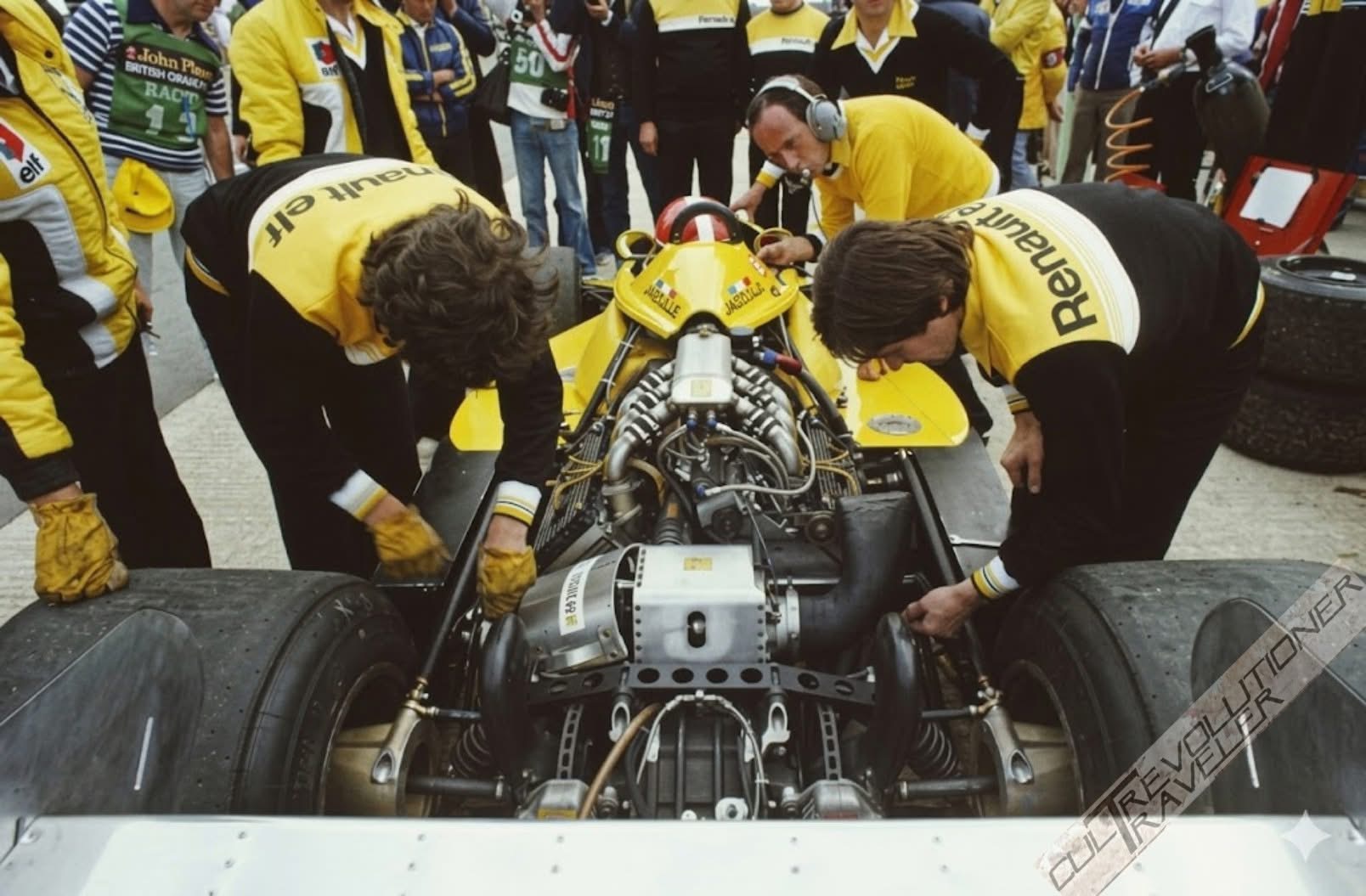
Development driver Jean-Pierre Jabouille played a crucial role in bringing the concept to competitiveness. Everybody was working very hard and believed in the project, he later recalled, but nobody knew how long it would take before it worked.
The early stages were extremely difficult. Turbocharging imposed enormous thermal loads, with exhaust temperatures approaching 900C. Cooling failure and oil leaks frequently forced retirements, earning the RS01 the nickname the Yellow Teapot. Jabouille remembered that fires were common when oil reached the hot exhausts.
If one memory stands out from that period, Jabouille often recalled the challenge of starting the V6 engine at high altitude. At Kyalami, it sometimes took four or five hours to get the engine running. The compression ratios were so low that the fuel would not ignite. The team had to warm everything through beforehand, even considering starting the engine once every hour through the night.
Turbo lag presented another issue, as the large single turbo required time to reach operating speed, meaning full power arrived after the throttle was applied. Drivers had to anticipate acceleration earlier than usual, sometimes triggering sudden wheelspin when boost arrived.
Reliability gradually improved during 1978, but the major breakthrough came in 1979 when Dudot replaced the single turbo with two smaller units. The twin-turbo arrangement reduced turbine inertia and shortened the intake pipework, improving throttle response.
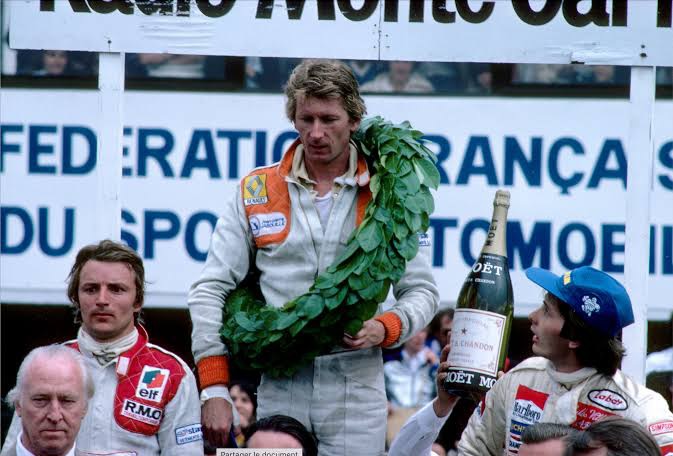
The revised engine debuted at Monaco in 1979 and soon powered the new RS10 chassis. Its potential became clear later that season at the French GP at Dijon, where Jabouille secured Renault's first F1 victory while teammate Rene Arnoux finished third.
Renault's success quickly prompted rival manufacturers to develop their own turbocharged engines. Ferrari introduced a turbo V6 and BMW produced a powerful turbocharged four-cylinder unit. Through the early 1980s, advances in intercooling, electronics, and specialized fuel blends dramatically increased performance.
By its final stage of development, the EF15 was capable of more than 1200 hp at around 12,500 rpm in qualifying trim, though engines at this level survived only a handful of laps, and between 800 and 900 hp in race trim.
Still under Dudot's technical guidance, Renault also pioneered pneumatic valve systems, replacing conventional steel springs with nitrogen-pressurized chambers that eliminated fatigue and allowed higher engine speeds. The innovation later became standard throughout F1.
The twin-turbo engine had come of age, already being supplied to Lotus as a customer team. Although Renault never won a Drivers' Championship during the early turbo era, the EF program revolutionized F1 engineering. Within a few seasons, turbocharged engines dominated the sport, and many of the technologies pioneered by Renault laid the groundwork for concepts that evolved into today's systems.