A gifted student with a talent for maths and physics, Hans Mezger finished school before spending two years in a foundry while waiting for a place at Stuttgart University. He had hoped to study aviation, but in postwar Germany that path was closed, so he became a mechanical engineer instead.
During Germany's economic recovery, engineers were in demand. Opel and Timken Bearings showed interest, but Mezger was drawn to Porsche after watching 356s rush past Werk 1 factory in Stuttgart during his driving lessons. In 1956, despite no advertised vacancies, he wrote to the company and was hired.
He joined Porsche's Calculations department under Egon Forstner, working on valve gear and stress calculations. His talent quickly stood out during development of the four-cam Fuhrmann engine, where he created a mathematical formula to standardize camshaft machining, work that later influenced Porsche's 804 F1 car and ultimately the air-cooled 911 engine.
By 1960, Mezger had become central to Porsche's engine development. His curiosity pushed him to study everything from motorcycle racing engines to combustion design, knowledge that proved critical in 1963 when Porsche's new six-cylinder 901 engine failed to meet targets.
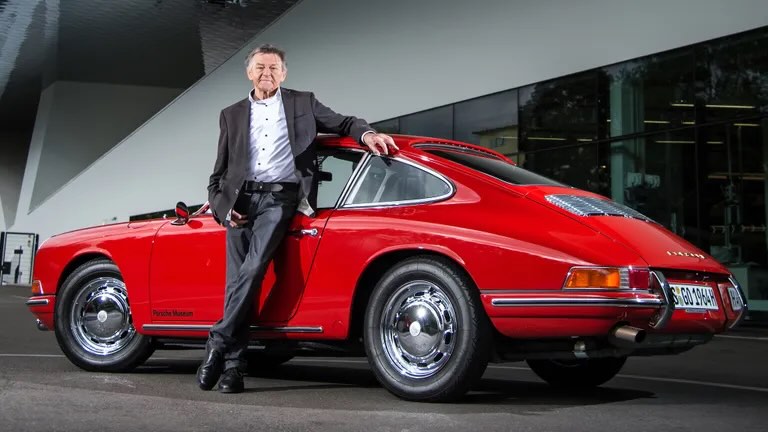
Pulled from Porsche's F1 program, Mezger redesigned the engine, creating its core architecture: a seven-bearing crankshaft, revised combustion chambers, and dry-sump lubrication.
Alongside Ferdinand Piech, who insisted the engine be designed for future growth, Mezger helped shape what would become Porsche's defining flat-six. He also replaced the earlier bevel-gear valvetrain with a simpler chain-driven setup, later adapted for the 917.
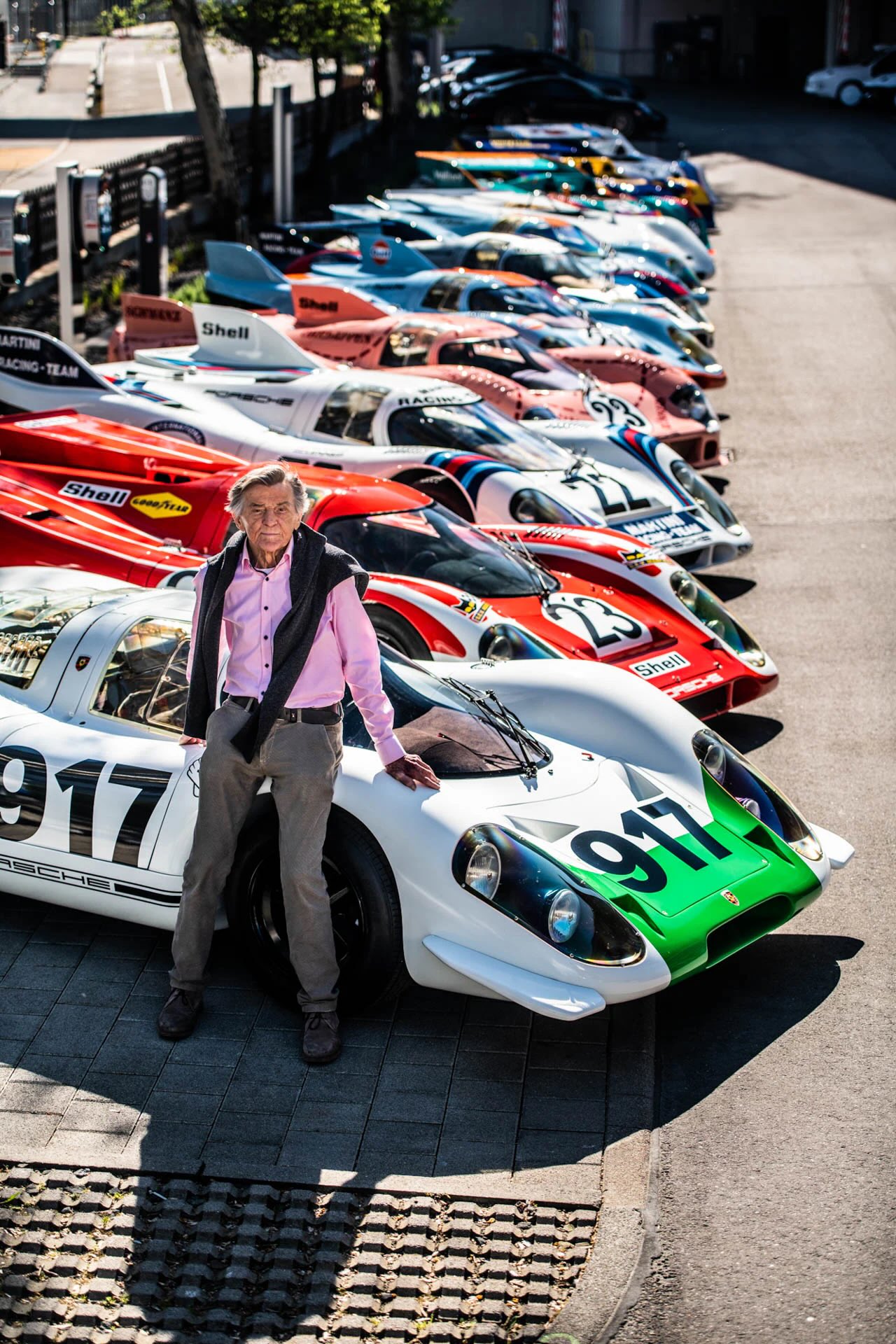
After the 911 launched, Mezger returned to motorsport just as Piech's ambitions transformed Porsche's racing program. Projects evolved from the 906 and 907 into the legendary 917.
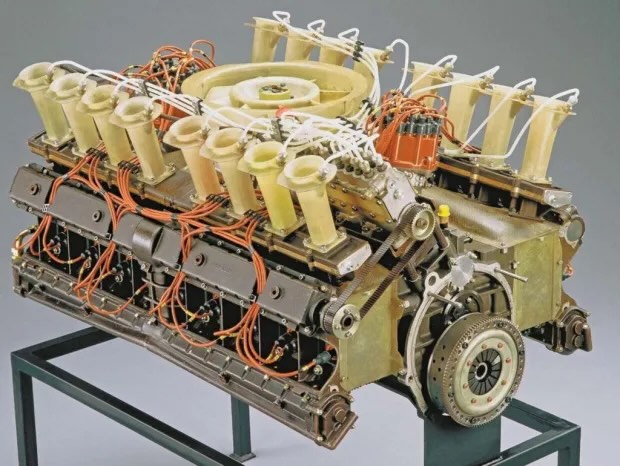
Built at extraordinary speed for FIA homologation, the 917's flat-12 drew heavily from Mezger's earlier work. To control vibration in the unusually long flat-12, Mezger designed a crankshaft that transmitted power from its center rather than one end. Early reliability issues gave way to dominance, with the 917 conquering endurance racing so convincingly in 1970 and 1971 that the FIA effectively killed it off with regulation changes.
Porsche then turned to Can-Am, where turbocharging became essential against America's huge V8-powered competition. Mezger focused on cooling and durability as Porsche mastered forced induction, laying the groundwork for the 934, 935, 936, and later the dominant 956 and 962.
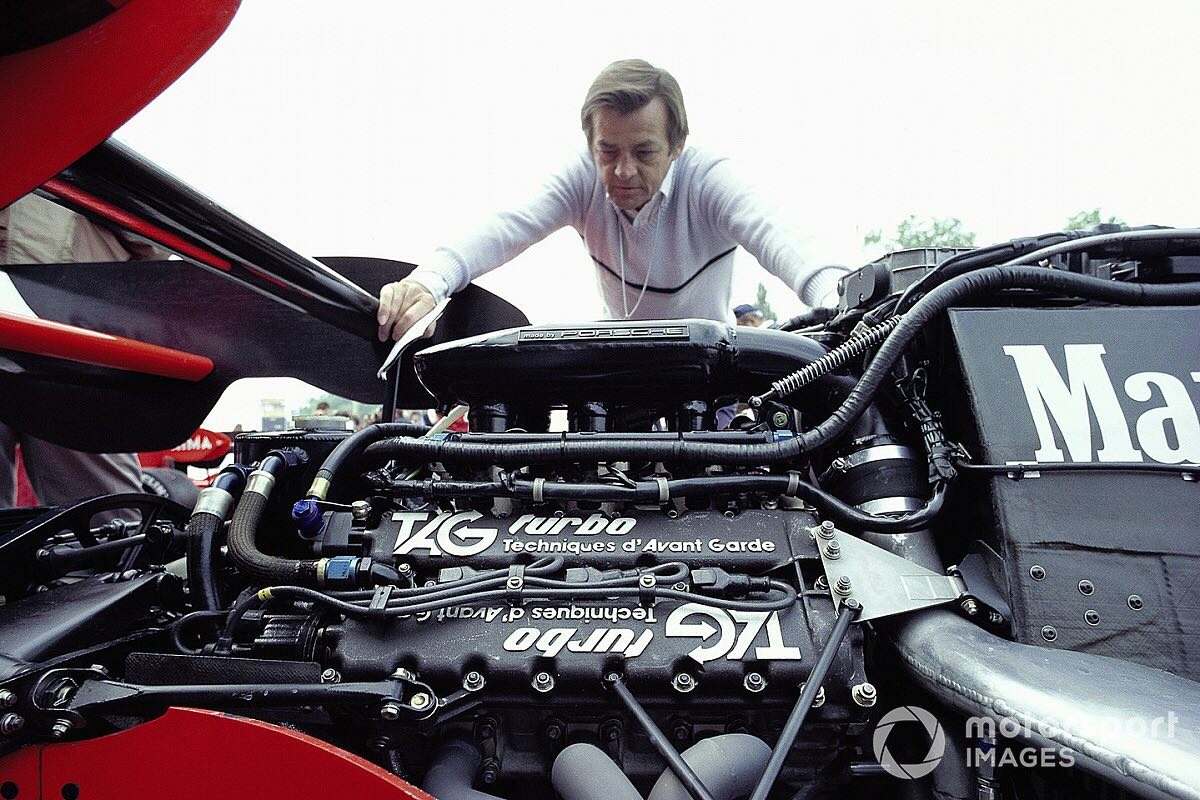
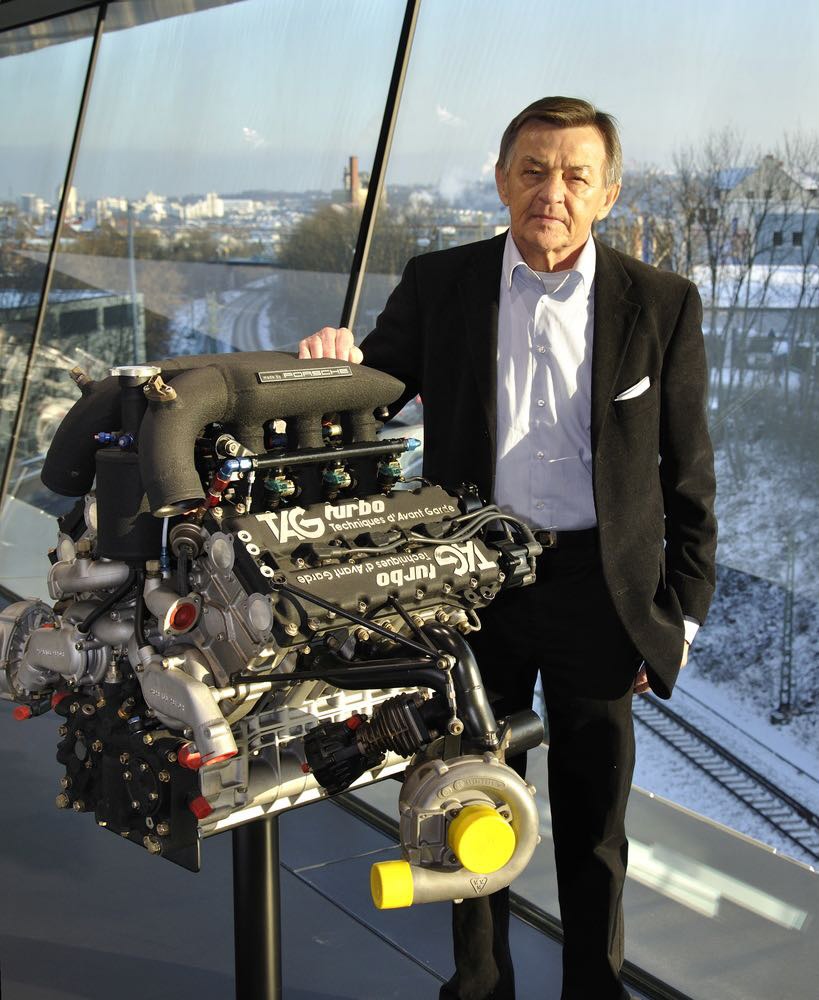
By the 80s, Porsche's turbo expertise attracted McLaren. Working with Ron Dennis, Mezger oversaw development of the turbo engines that powered McLaren to multiple F1 World Championships, further cementing his reputation.
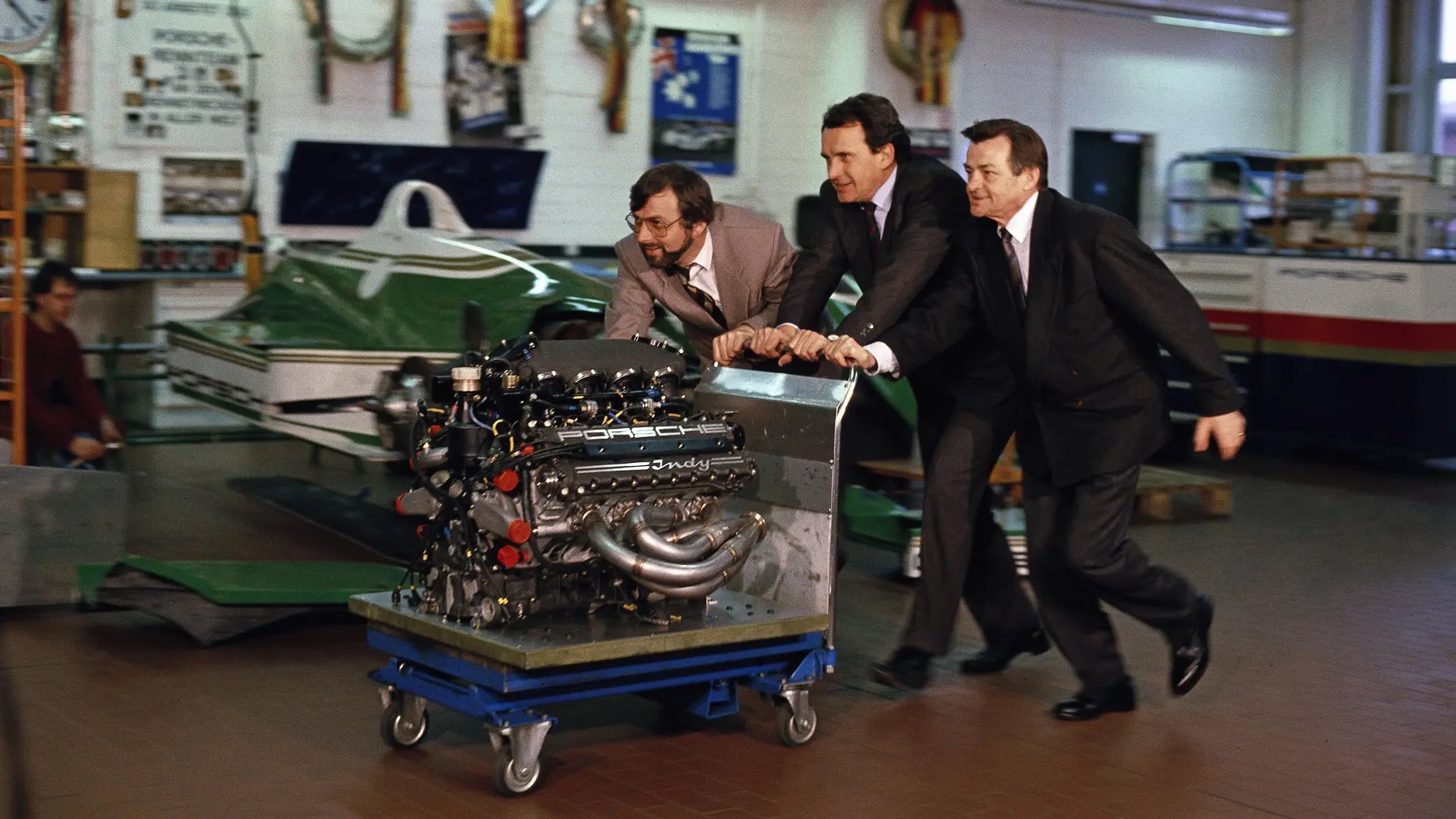
A later F1 V12 project failed, and as financial struggles hit in the early 1990s, Mezger considered retirement. However, he stayed on to mentor younger engineers as Porsche prepared a new generation of cars.
He retired in 1993 after nearly four decades at Porsche. Hans Mezger's legacy shaped Porsche more than almost any engineer in its history. Fittingly, the final road-going Porsche to use the true Mezger-derived engine was the 2011 997 911 GT3 RS 4.0, a fitting farewell to one of the greatest engine designers in automotive history.