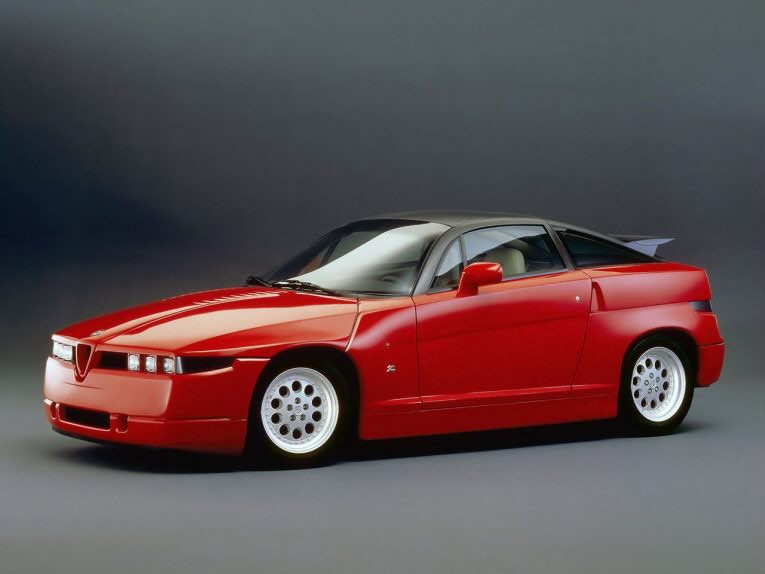
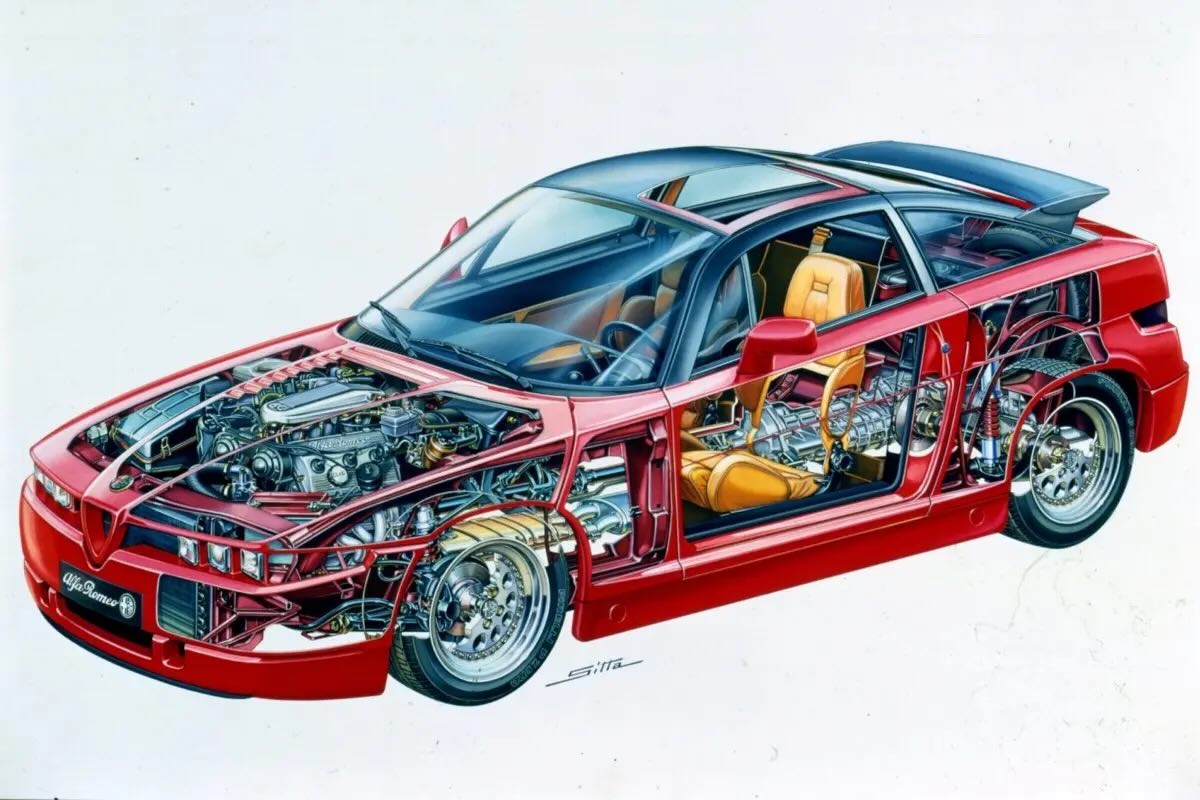
Beneath its controversial shape, the Alfa Romeo SZ's bodyshell was far more advanced than its brutalist styling suggested. Its steel structure was clothed in three main materials.
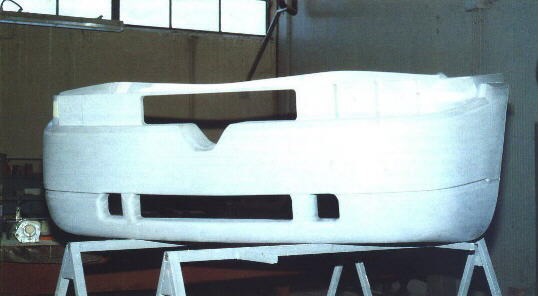
Most of the body used glass-fiber composite panels made with MODAR, a thermosetting methacrylic resin produced by ICI. Carbon fiber was used for smaller components such as the rear wing, while aluminum was chosen for the roof panel.
MODAR had already been used by Alfa Romeo on the bumpers of the Spider, but the SZ pushed the material much further. Instead of the compression moulding used there, Alfa chose cold injection moulding for the SZ's much larger body panels, improving surface finish, keeping panel thickness more consistent and reducing air absorption during production.
MODAR offered several advantages over traditional polyester composites of the time. It was tougher, more flexible before cracking, more resistant to heat and weather, and easier to work with during production. Alfa also believed it would provide a smoother finish and better paint adhesion, at least in theory.
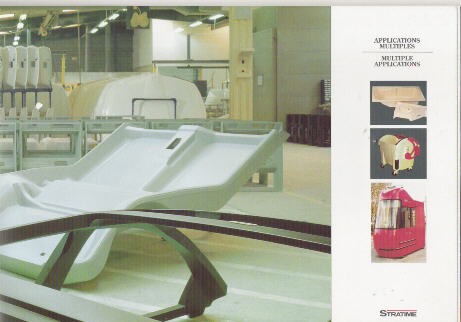
The panels were produced by specialist suppliers, including Car Plast in Italy and Stratime in France. The irony was that the advanced materials did not make the SZ entirely trouble-free.
The composite panels could actually be heavier than conventional steel equivalents, and many surviving SZs and RZs later became notorious for micro-blistering beneath the paint, a flaw owners came to know all too well.