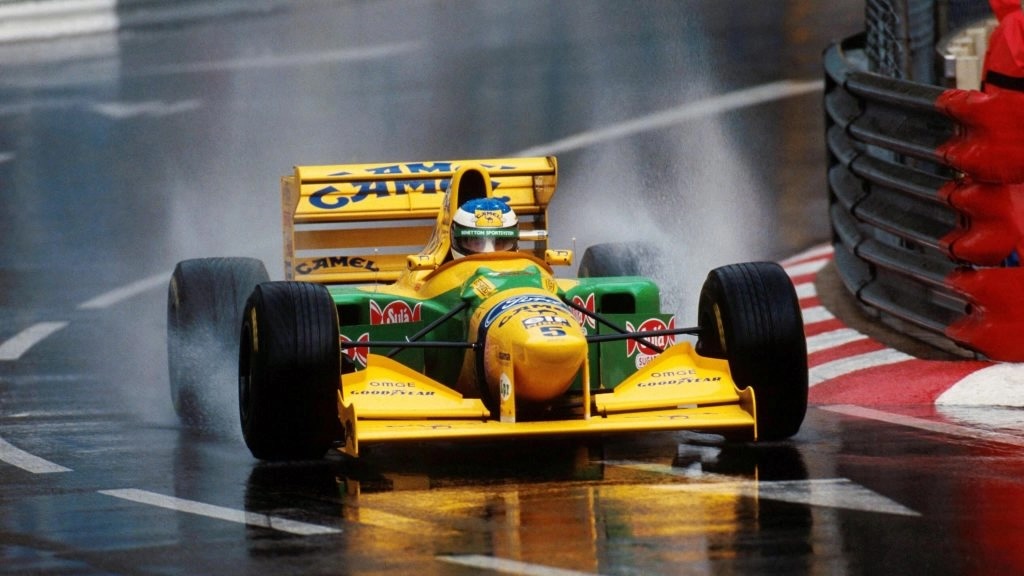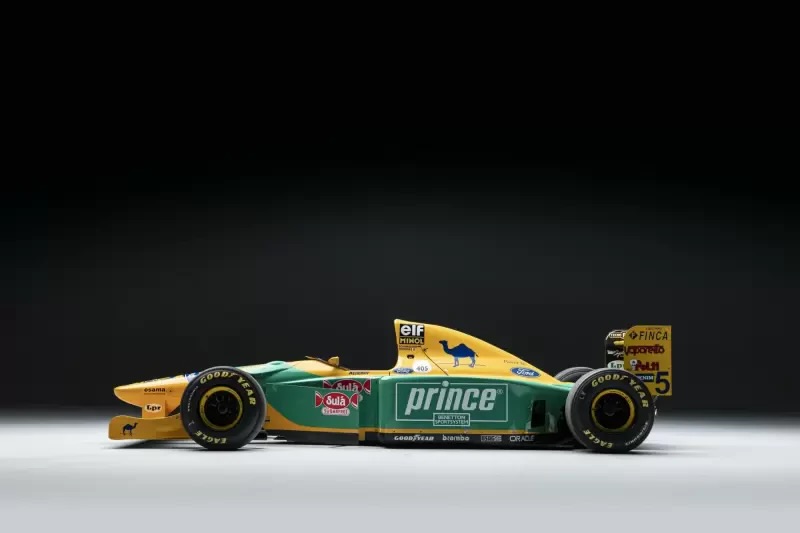
By the early 1990s, F1 had become a battlefield of innovation, and active suspension was the ultimate weapon: a system that kept the car flat, stable, and fast through corners, bumps, and braking zones alike.
The first generation of active systems drew inspiration from Citroen’s hydraulics. Early prototypes even used Citroen parts such as accumulators and pressure valves, with hydraulic power supplied by a Sundstrand gear pump similar in concept to home heating pumps.
Lotus used a similar setup, though these pumps were barely up to the demands of F1. To control a car with fully hydraulic active suspension, the system required significant energy. These systems were known as high-bandwidth systems, and Lotus was the only F1 team to employ this approach.
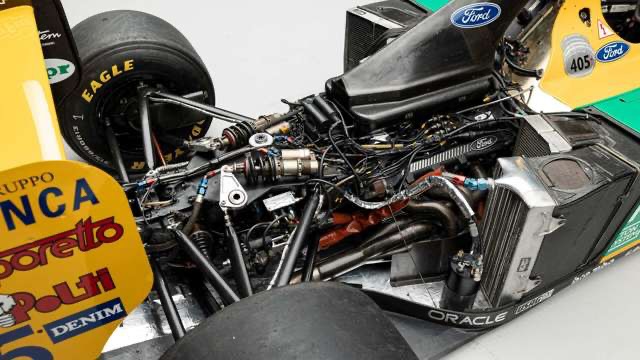
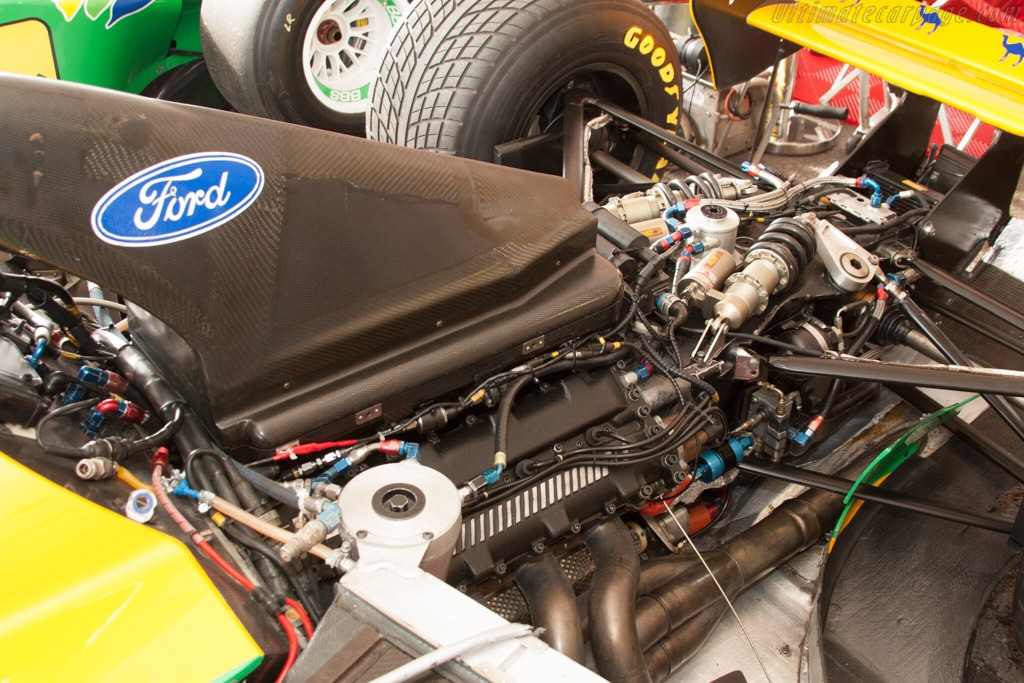
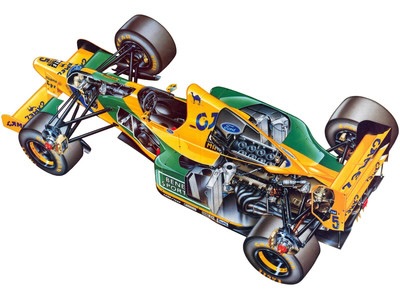
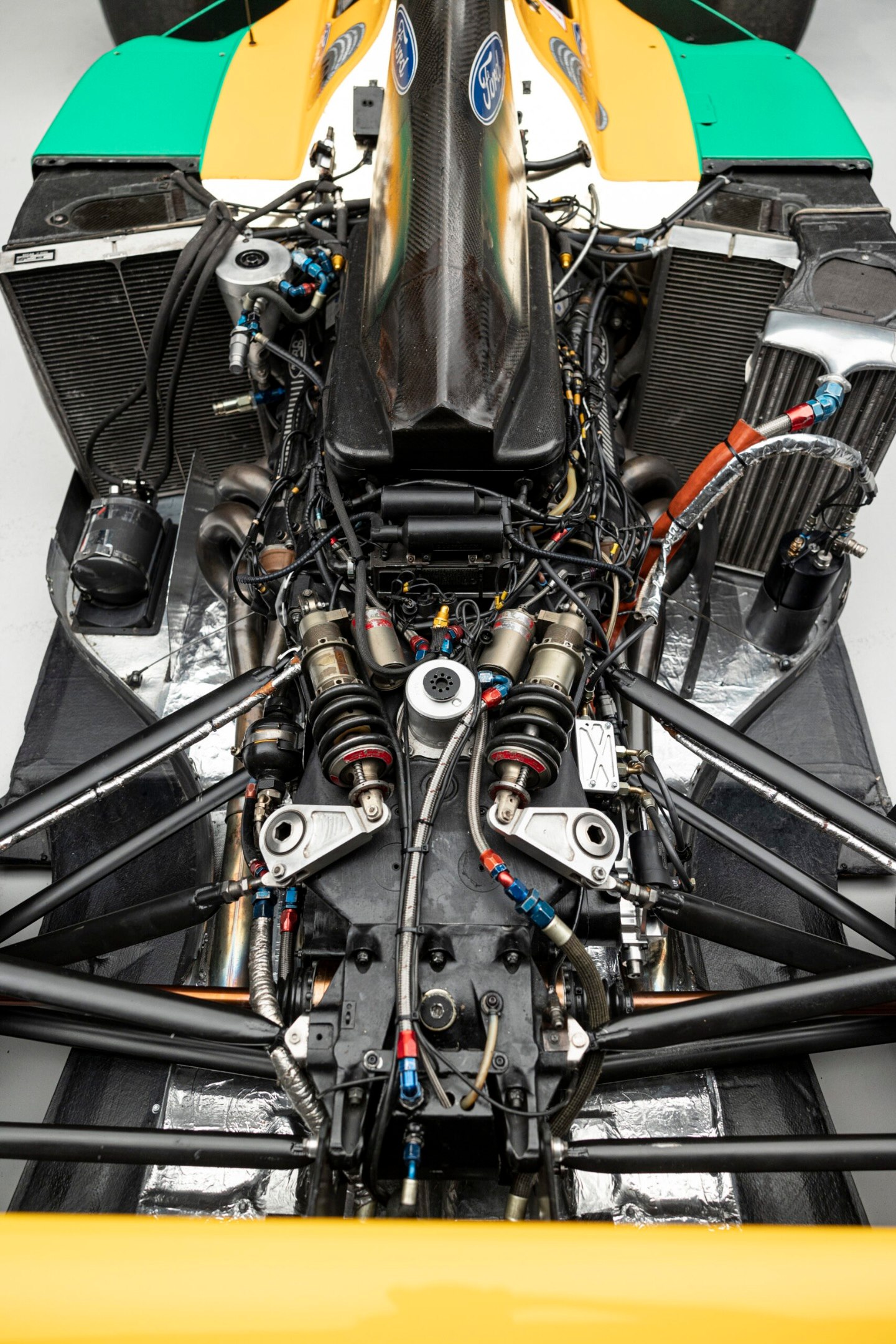
Benetton opted for a lighter, more efficient low-bandwidth system. Its engineers used gas springs to absorb bump energy and carry aerodynamic loads, paired with a small passive damper tuned to control wheel-hop vibrations around 18 Hz, frequencies too fast for hydraulics to manage directly.
The main hydraulic actuators, operating at roughly 3,000 psi, controlled pitch, bounce, and roll while actively maintaining ride height up to about 10 to 12 Hz.
The system’s mechanical response extended to around 30 Hz, allowing it to react to rapid inputs such as curb strikes. For the most extreme impacts, a stack of Belleville spring washers behind each actuator’s floating piston provided a mechanical safeguard.
The system drew about 7 kW at peak load, though only momentarily, with much lower average power. To avoid air contamination that could cause erratic hydraulic behavior, Benetton used a sealed bootstrap pressurization tank. This eliminated air pockets, prevented cavitation, and kept the hydraulic circuit stable even under extreme G-forces.
Each actuator contained its own pressure transducer and potentiometer for feedback, while accelerometers on the front and rear axle centerlines tracked vertical motion. The rear sensor was mounted on a rubber-isolated base to filter out engine vibrations, ensuring only true chassis movement was measured.
At the system’s core was Benetton’s in-house computer, running control logic similar to the Skyhook principle. The system worked as if the car were hanging from an invisible hook in the sky, keeping the body level while the wheels moved over bumps.
Early versions were almost too precise, trying to keep the car flat relative to the Earth’s center, as if driving through hills instead of over them. Engineers fixed this by filtering the accelerometer data so the car could follow the track’s natural slopes more smoothly.
As well as controlling ride height, the system also eliminated roll. In fact, the chassis leaned inward to counteract the compression of the loaded outside tire. Benetton found that pure hydraulic roll control outperformed the power-assisted anti-roll bars it had tested, allowing dynamic adjustment of roll stiffness to correct understeer or oversteer.
Drivers could fine-tune the balance manually or pre-map it for different circuit sections, leaving them to focus on tire management and rhythm.
Conventional stiff setups might be sharp on smooth tarmac, but on anything else, they let the tire bounce off bumps, reducing the vertical load the tire needs for grip. Active suspension’s genius was that it offered both compliance and control, keeping the tires planted and the aerodynamics consistent.
Active suspension was banned for the 1994 season, ending one of F1’s most fascinating technical eras. It is hard not to wonder how far teams could have pushed the technology if it had stayed.