During World War II, military aircraft designers began experimenting with ways to overlay targeting and flight data directly onto pilots’ views, projecting gun sights and gauges onto glass panels.
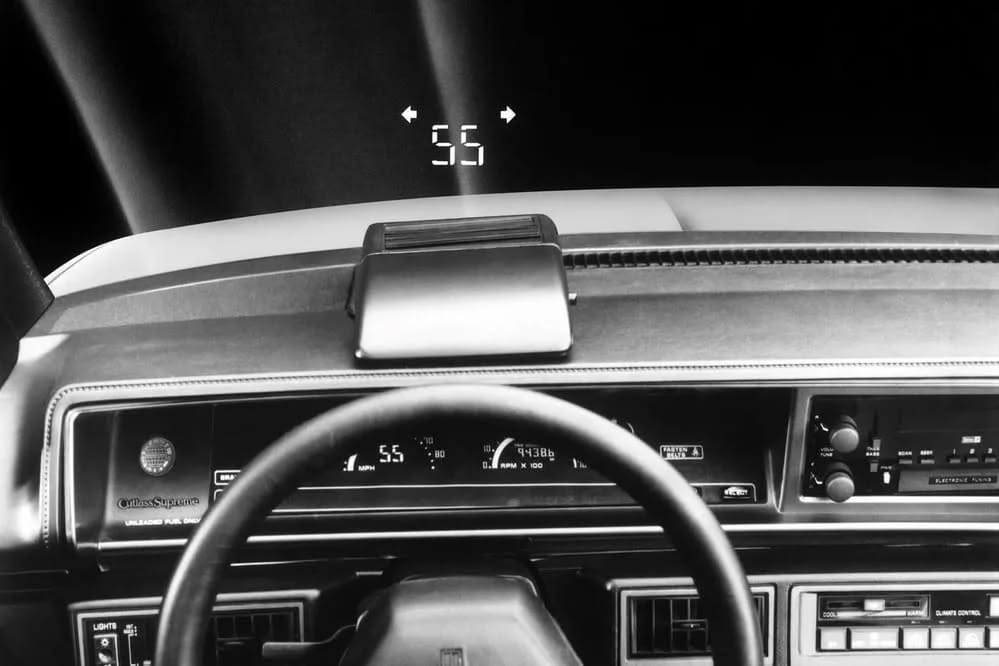
General Motors toyed with HUDs in concept cars during the 1960s, but the first production model to feature the technology was the 1988 Oldsmobile Cutlass Supreme Indy 500 pace car edition. It displayed speed in an unmistakably 1980s font, along with turn signals and other indicators.
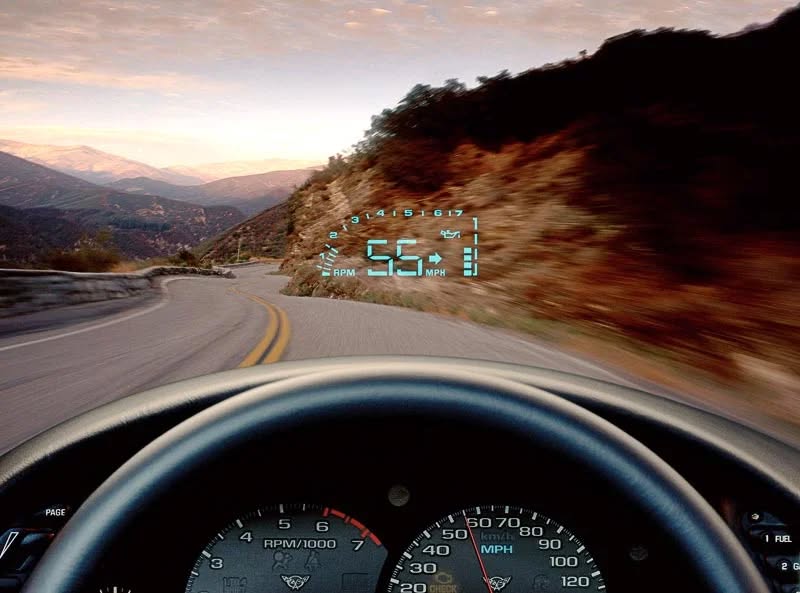
HUDs really gained traction in the early 2000s, especially in luxury and performance vehicles. Today, brands from BMW and Audi to Honda, Chevrolet, and Jeep offer the technology.
Originally limited to projected speedometers, HUDs now deliver navigation, infotainment, and safety data directly into the driver’s line of sight.
As driver-assistance systems evolve, HUDs will display more relevant data, from back-seat monitoring in family cars to obstacle alerts and optimal path suggestions in off-roaders.
Future HUDs will also get bigger and smarter. Audi and Mercedes are developing windshield displays equivalent to 70-inch screens, while suppliers are working on 3D projections and augmented-reality visuals.
Volvo is even exploring optical film technology that could one day turn the entire windshield into a transparent full-screen display.