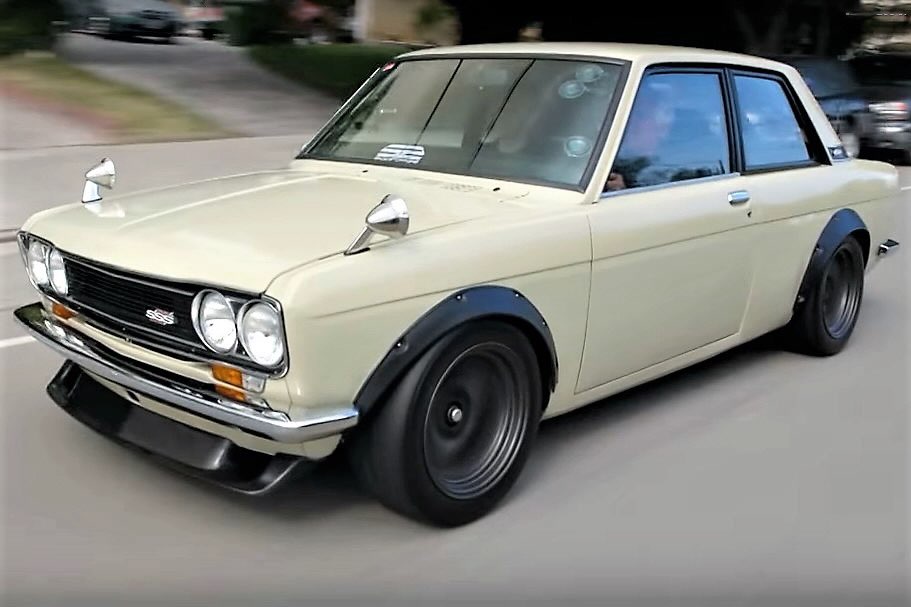
Back in the 60s, Nissan studied BMW's progress so closely it may as well have copied the homework. While Munich's Neue Klasse sedans were redefining the compact sports sedan, Nissan saw an opportunity: deliver the same rear-drive, driver-focused formula at a fraction of the price.
But the Datsun 510 was more than a Japanese BMW imitation. Its development drew from years of engineering lessons. Nissan had built Austin models under license after WWII, gaining manufacturing expertise, while its acquisition of Prince Motor Company brought engineers whose work had been shaped by studying Mercedes engineering, particularly in engine design and durability.
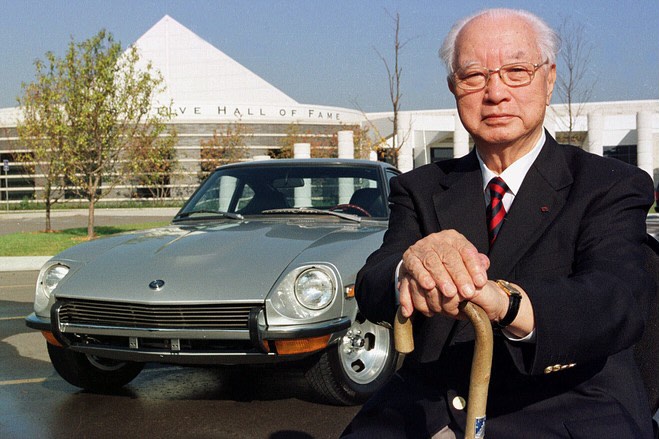
A key figure in the 510's development was Yutaka Katayama, better known as Mr. K. Immersed in Southern California car culture, he knew Americans wanted more than a basic economy car. Nissan initially planned the new model with a smaller engine, but Mr. K pushed for a 1.6L export engine, believing the car needed real performance credibility. He won.
Introduced at the 1967 Tokyo Motor Show as the Datsun Bluebird 510, the car was styled in-house by Teruo Uchino, with influence from Mr. K. Compared with the outgoing Pininfarina-designed 410 and 411, the 510 was larger, roomier, and far more mechanically sophisticated beneath the surface.
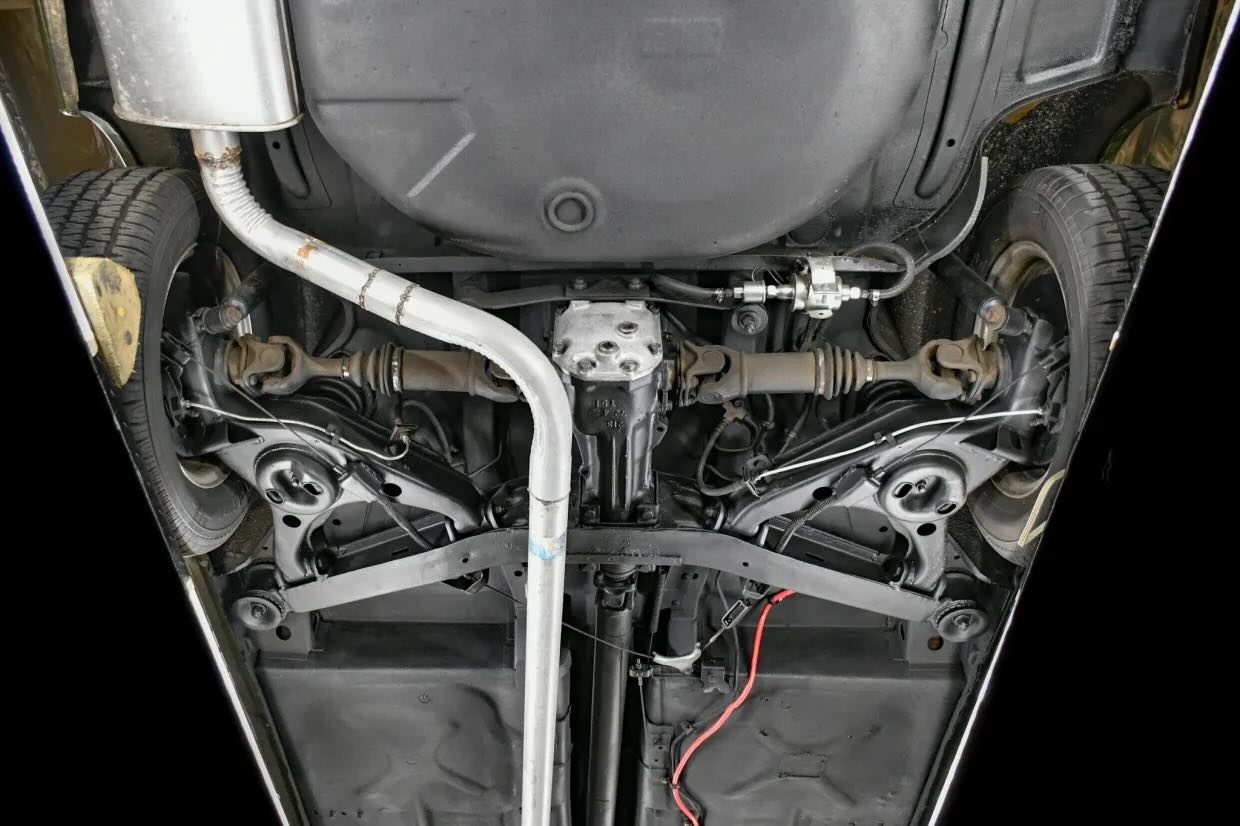
Mechanically, it punched well above its class. Most sedan models featured MacPherson strut front suspension and independent rear suspension via semi-trailing arms, while wagons used a live rear axle. Engine options varied by market.
Japanese-market models launched with a 1.3L SOHC four producing around 71 hp, while export-market cars received the 1.6L L16 overhead-cam four with roughly 96 hp. Hotter 1600 SSS models gained twin Hitachi side-draft carburetors and a hotter cam, pushing output to around 109 hp in a car weighing just over 2,000 lb. Buyers could choose a four-speed manual or optional three-speed automatic.
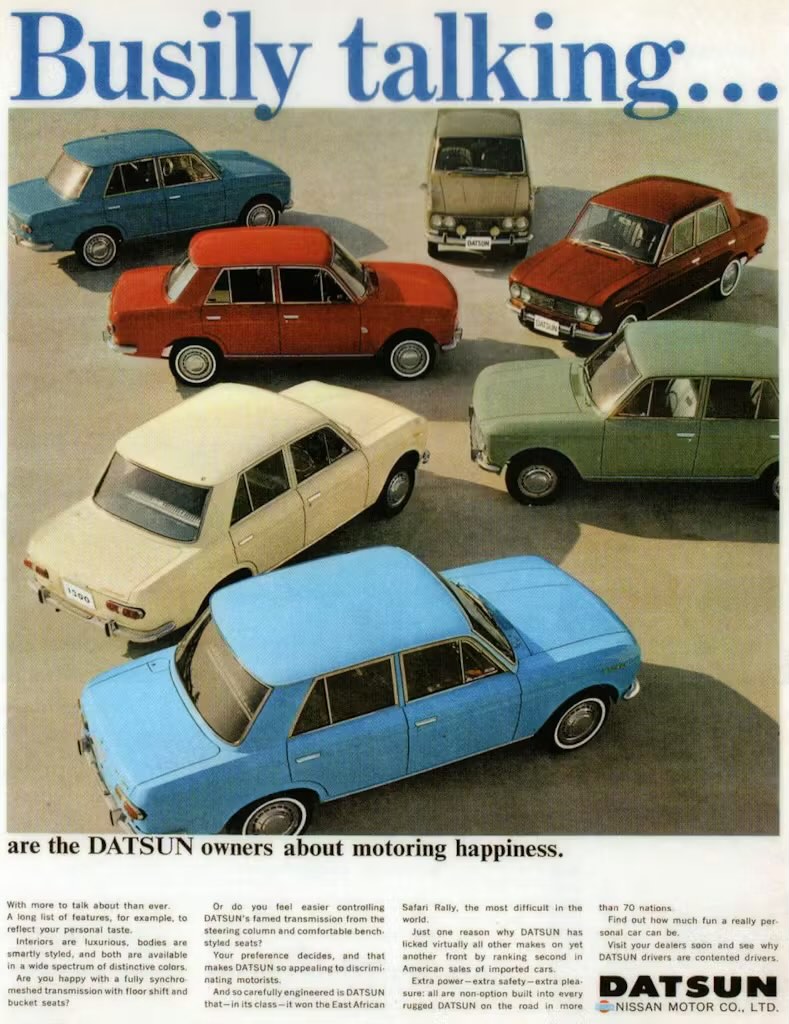
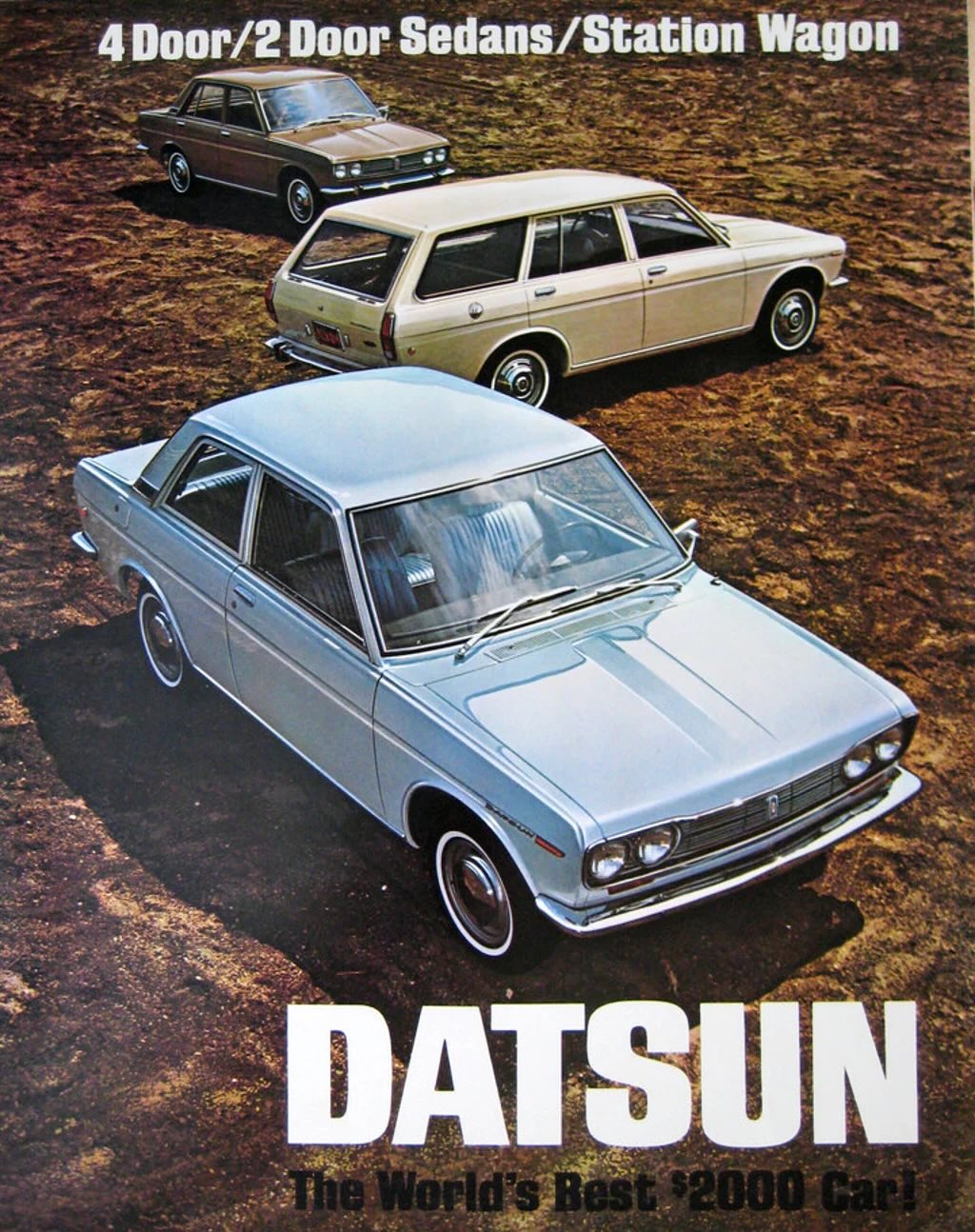
The 510 came as a four-door sedan, two-door sedan, wagon, and rarer coupe. When the 510 reached America in 1968, Mr. K knew Nissan had something special. After driving one, he was so impressed he reportedly made everyone in his office take it for a spin.
But the 510's success extended far beyond the United States. Sold globally under the Bluebird and Datsun names, it became one of Nissan's first major international successes, with production running until 1973. It remains one of Japan's most beloved classics.